Showing posts with label #SDLC. Show all posts

Sunday, 5 April 2020

Design Phase

Purpose
Process of creating a design for a database that will support the enterprise’s mission statement and mission objectives for the required database system

Activities
- Acquire hardware and software
- Develop the details of the new or modified information system

1) Acquire hardware and software
- Identify technical specifications
- Request Vendor proposal
- Test and evaluate vendor proposals
- Make a decision

2) Develop the details of the new or modified information system

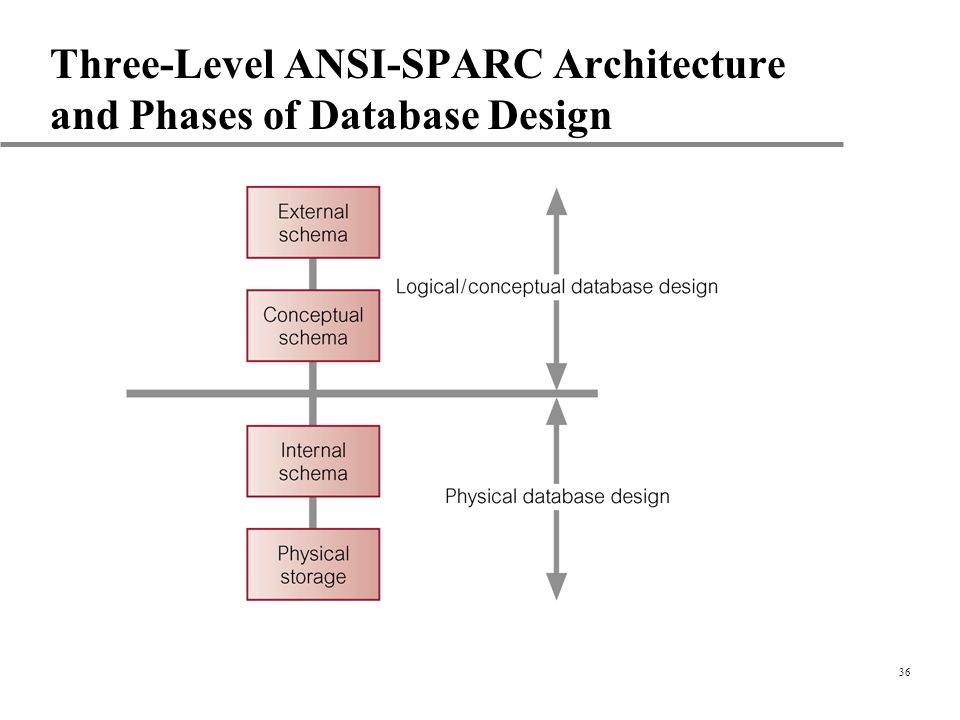
A) Conceptual Database Design
- It involved design rules and technique which explain the whole system simple and easily
- So, it reduces the time spent and energy needed for coding, debugging and maintenance
- Conceptual data model is source of information for logical design phase

B) Logical Design
- A process of developing information that going to be applied by organization based on a data model
- Conceptual data model is refined and mapped on to a logical data model

Three main activities
- Production of conceptual data model for all users
- Production of logical data model for every user
- Production of global logical data model

C)Physical Design
- Process of producing a description of the database implementation on secondary storage

Activities
- Determination hardware specifications for database server and peripheral devices
- Determination software specification for operating system (Linux) and special software (e.g. Java)
- Design user interface and data captures devices such as keyboard and mouse
- Report format such as summary report
Database Planning, Design, and Administration Transparencies - ppt ...

Application Design
- Design of user interface and application programs that use and process the database.
- Includes two important activities:
1) Transaction Design
- An action, or series of actions, carried out by a single user or application program, which accesses or changes content of the database.

- Three main types of transactions: retrieval, update, and mixed

2) User Interface Design

- By prototyping, it is used to identify features of a system that work well, or are inadequate and clarify the users’ requirements

Software Design
Design
Explanation
1) Architectural design
Identify the overall structure of the system, the principal components (sometimes called sub-systems or modules), their relationships and how they are distributed.

2) Abstract Specification
An abstract specification of its services and the constraints under which it must operate

3) Interface design
Define the interface between system components

4) Component design
Take each system component and design how it will operate

5) Data structure design
Design the system data structures and how these are to be represented in a database or structure

6) Algorithm design
Design or formulate a formula in design


6 basic software models
- Waterfall Model
- V-shaped Model
- Iterative Model
- Spiral Model
- Big Bang Model
- Agile Model


If you have any comments, please leave them below!
Don't forget to follow me and share! Thank you!

Friday, 3 April 2020

Analysis Phase

Purpose
- To understand the detail study on the current system to identify the new requirement

Activities
1) Conduct a preliminary investigation
- A general study of the project conducted by system analyst. Then, present finding report
- If the project team committee approves, then detail analysis begins

More details: Preliminary Investigation

2) Perform Detail Analysis
- Study how the current system work, determine the users’ needs and requirements and recommend a solution
- Method to obtain user’s requirement
I. Document review
ii. Observation
iii. Interview
iv. Sampling
v. Questionnaire

More details: Method to obtain user’s requirement

Structure of System Requirement

Purpose
- To get the information about the detained function and operations needed in the system development process
- to get the accurate and timely data and information in the system development process
- to help system analyst to understand exactly how the current system work before developing a new system

Types of modelling in Structure of System Requirement
- Process modelling
- Conceptual data modelling
- Logical modelling
More details: Structure of System Requirement

Hot Question: Why involve users in system development process
Answer: Users are people who use the system and they provide information about the detailed function and operations needed in the system development process. Besides that, users are also easier to accept the system if they involve in a system development process.


If you have any comments, please leave them below!
Don't forget to follow me and share! Thank you!

Preliminary Investigation


Purpose
- Investigation by the system analyst to analyze and evaluate the current system and determine if the current system needs enhancement or replacement


Activities
- Determine project scope
- Determine required activities
- Estimate time for each activity
- Estimate cost for each activity

Outcome of preliminary investigation
- System analyst present the feasibility report that contains introduction, existing system, benefit of a new system, feasibility of new system and the recommendation

If you have any comments, please leave them below!
Don't forget to follow me and share! Thank you!

Method to obtain user's requirement

What is User Requirements Capture?

Interview
- System analysts interview managers, employees, customers, suppliers, and other people to gather information about business processes and problems and collect ideas and suggestions for system improvement

Step
1) Identify the interviewees
2) Set the interview objectives
3) Prepare for the interviews
4) Conduct the interviews
5) Document and evaluate the interviews

Advantage
- Interviews allows open-end questions. The analysts may be able to obtain more information from different levels of users
- The questions are not fixed and can be changed accordingly for different interviewees
- The analysts may also be able to observe some non-verbal communications of the interviewees (facial expressions and body movements)
- The analyst can explore the real needs during interviews

Disadvantages
- Interviews are time consuming and costly
- The interviewer must have good communication and human relation skill
- Interviews may have to be conducted at different locations

Document review
- System analyst can review documents to find out how the current system is designed and how it is supposed to operate

Advantages
- By understanding the existing system, the analyst will be able to know its strengths and weaknesses and thus help them to design a better system
- Economical method to get user’s requirement

Disadvantages
- Information in the documents may be out of date or not available
- The documents procedures may be changed, or even eliminated
- The documents may be difficult to readable and understand or may be complex

Observation
- System analyst can watch employee perform a task to observe whether procedures work as expected

Advantages
- By seeing and participating in the system’s operations, it helps the analysts to understand the system better and it might provide additional perspectives about current system
- This is one of the most inexpensive techniques, compared to others like interviewing and questionnaires
- The data or facts gathered using this technique is highly reliable
- It helps to build relationships with the operating staffs

Disadvantages
- Direct observation may distract the staff and may result in poorer performance. This will affect the result of the observation
- Sometimes, the staff may just let the analyst see what they want the analyst to. This may not be the actual performance level
- The analyst may not be able to see of the unusual or unexpected situations that occur only occasionally

Questionnaire
- System analyst can collect information from a large group of people using a questionnaire

Advantages
- This is best technique to collect data from a large group of people
- The responses from different individuals can be tabulated and analyzed quickly
- The identity of the respondents will not be known. This will encourage the respondents to provide real facts
- Respondents are given the freedom when to fill in and return the questionnaire

Disadvantages
- The number of replies is not guaranteed
- Usually takes a long time to get the reply
- Some individuals might think that the questionnaire is tedious to fill in, and therefore may not return
- The questionnaires are inflexible and the information gathered might not be able to reflect the real situation
- Good questionnaires are difficult to prepare

Joint Application Development (JAD)
- A technique that complements other systems analysis and design techniques by emphasizing participative development among system owners, users, designers, and builders. 

During the JAD sessions for systems design, the systems designer will take on the role of facilitator for possibly several full-day workshops intended to address different design issues and deliverables


If you have any comments, please leave them below!

Don't forget to follow me and share! Thank you!

Structure of System Requirement

1) Process Modelling
- to show the process and function of the system and data flow among the processes. It also shows the data files used in the processes.
e.g. Data Flow Diagram & Structured Design

Data Flow Diagram
-System analysis and design tool that graphically show the flow of data in a system
- Used to show the process and function of the system
- Show the flow of data among the processes/entities

Example:
Ticket System


Structured Design
- Program design that uses graphical description tools (Structured chart). This approach involves breaking the programming into logical manageable portions of modules

Example:
Student Registration System
Benefits: Early detection of design flows, clear and complete documentation, modular design to break up problem into smaller sections and leads to better programs because modules are independent of one other

2) Conceptual Data Modelling
- shows entities relationship, system structure and relation among the data. e.g. Entity Relationship Diagram (ERD)

ERD
- A diagram that uses graphical concept to show the data flow from one entity to another entity by using types of relation and cardinality.

Chen Notation

An entity is an object or concept about which you want to store information. 

A weak entity is an entity that must defined by a foreign key relationship with another entity as it cannot be uniquely identified by its own attributes alone.

Actions, which are represented by diamond shapes, show how two entities share information in the database. In some cases, entities can be self-linked. For example, employees can supervise other employees.
Attributes, which are represented by ovals. A key attribute is the unique, distinguishing characteristic of the entity. For example, an employee's social security number might be the employee's key attribute.

A multivalued attribute can have more than one value. For example, an employee entity can have multiple skill values.

Connecting lines, solid lines that connect attributes to show the relationships of entities in the diagram.

Cardinality specifies how many instances of an entity relate to one instance of another entity. It is always linked to a relationship to connect one entity to another entity.

Source:


UML Notation

3) Logical Modelling
- Shows what a system is or what it does and illustrates the logical part of a system and thus ignore the technical and implementation independent
- e.g. Pseudocode/Flow Chart/Decision Table

Pseudocode
- an informal high-level description of the operating principle of a computer program or other algorithm

Flow Chart
- a diagram that shows a process, system or computer algorithm


Decision Table
- Table that lists a variety of condition and the action that correspond to each condition

- System analyst can use decision table to show the detail process of new system consists of many condition or rules

If you have any comments, please leave them below!

Don't forget to follow me and share! Thank you!

Thursday, 2 April 2020

Planning Phase

Purpose
- To determine the need of developing a new information system in order to get the right information.

Activities
1) Review, approve and prioritize the project request
- System Analyst investigates current system to determine if the system is adequate or there is a need for new system

2) Allocate resources such as money, people, and equipment
- If there is need for new system then it will look into its feasibility, whether it is feasible form financial technical, social, and legal point of view. 

3) Form a project development team for each approved project

Why Planning Phase carried not well?
- Unrealistic goals
- No accountability
- Inability to change
- Not having right people involve
- Partial commitment

Feasibility Study
- An investigation by the system analyst to determine if the project should proceed. The feasibility of a project can be ascertained in terms of technical factor, economic factor or both. The feasibility study is documented with a report showing all the specification of the project. If the project is to proceed, the feasibility study will produce a project plan and budget estimates.

Types of Feasibility Study Report in Project Management & Benefits of Feasibility Study

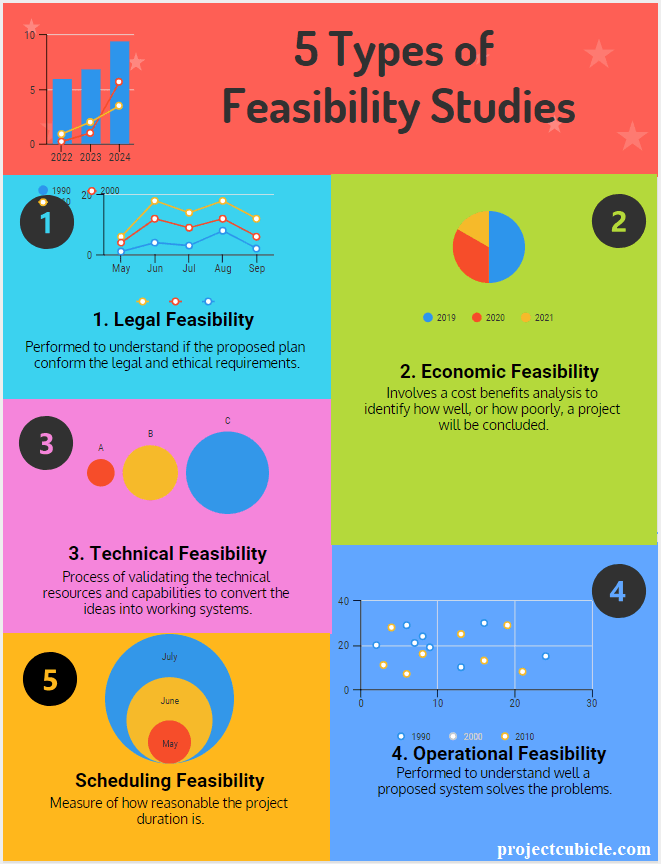
-Types of feasibility study
A) Economic Feasibility
B) Technical Feasibility
C) Operational Feasibility
D) Legal Feasibility
E) Scheduling Feasibility

Economic Feasibility
- Study about the projected benefits of the proposed system outweigh the estimated cost
- For example, you are going to build a development team for a project, so there are many factors that are considered in the economic feasibility study. So first, you need to think about the development team. For a development team, you must pay them salary and provide them development training and also consultant fees. For their comfort in the company, you need to provide them suitable office space and equipment and also vendor. For the software and hardware used, you must consider their license, fees and latest updates. Besides that, you also need to consider data conversion cost. Thus, these are the that are needed to consider in the economic feasibility study

Technical Feasibility
- Study that measures whether the company has or can obtain the hardware, software and people needed to deliver and then support the proposed information system

- For example, your company is planning to improve the current network infrastructure. You analyzed the new system and concluded that the new system can use the organization’s existing network infrastructure. For examples, project location, project size, familiarly with technology, number of people, time and features. This shows that a new system is technically feasible.

Operational Feasibility
- Measure how well the proposed information system will work
- For example, your company are going to do a project to build a new theme park for a client. Then you performed a study to determine how the theme park will operate in a way that is conducive to its inhabitants, parking, dining, human flow, accessibility. This can be an example of operational feasibility.

Legal Feasibility
-  Measure whether the proposed system violates the laws of the country or not
- For example, your company is planning to open a branch in a new region. According to the studies you recognize that the country does not allow an individual foreigner owning a property. So, you select the rental option instead of buying.

Scheduling Feasibility
- Measure at how long the system will take to develop or whether it can be done in a desired time-frame
- For example, an investor proposed a shop construction project to your company. However, he requested that the project will be completed in one year. The development team conducted a feasibility study based on the requirements to complete the project on time.

If you have any comments, please leave them below!
Don't forget to follow me and share! Thank you!

Tuesday, 4 February 2020

What is System Development Life Cycle (SDLC)?

System Development Life Cycle (SDLC)
- System Development is a set of activities used to build an Information System
- The activities can be grouped into larger categories called phases.
- The collection of the phases is called System Development Life Cycle.
- There are 5 main phases in SDLC
i) Planning/investigation
ii) Analysis
iii) Design
iv) Implementation
v) Maintenance


Five Main Phases of System Development Life Cycle
If you have any comments, please leave them below!
Don't forget to follow me and share! Thank you!

Apa itu Kitaran Hayat Pembangunan Sistem (SDLC)?

Kitaran Hayat Pembangunan Sistem
- Pembangunan sistem merupakan satu set aktiviti yang digunakan untuk membentuk satu sistem maklumat.
- Aktiviti ini boleh dikumpulankan menjadi kategori yang lebih besar yang dinamakan fasa.
- Koleksi fasa ini dipanggil sebagai Kitaran Hayat Pembangunan Sistem(SDLC)
- SDLC mempunyai lima fasa yang utama
i) Perancangan (Planning/Investigation) 
ii) Analisis (Analysis)
iii) Reka Bentuk (Design)
iv) Pelaksanaan (Implementation)
v) Penyelenggaraan (Maintenance)

Lima fasa utama Kitaran Hayat Pembangunan Sistem

Untuk English Version,

Kalau mempunyai apa2 masalah dan soalan, boleh komen dekat bawah!
Jangan lupa follow saya dan share! Terima Kasih!